Gawler / Gawler & Districts
Barossa zone, 1889 to 1986
Formation
The first recorded game of football played in Gawler was in June 1868, shortly after the formation of the Gawler Football Club. Gawler played challenge matches against nearby clubs such as Kapunda and Angaston but also against city clubs. As the population of Gawler increased along with the popularity of football, it became necessary in 1880 to divide Gawler into two clubs, Athenian and Havelock. The Albion club was formed in 1881 and these three Gawler teams increased in strength to the point where the clubs united to form one Gawler club which joined the South Australian Football Association in 1887.
To support the Gawler club, which had not enjoyed a lot of success in its first two years in the SAFA, a local competition was formed in 1889 to provide a solid foundation for recruiting, improve spectator interest and raise the standard of the players involved. The new Gawler competition consisted of three clubs, Willaston, Gawler Central and Gawler South and was known as the Gawler Football Association.
Although the Gawler club dropped out of the SAFA and disbanded in 1890, the Gawler Football Association and its three clubs continued to thrive to become one of South Australia’s strongest leagues of the time. Due to a dispute with the Gawler Football Association over a player’s clearance, the Gawler South club sat out the 1914 season. They were dissatisfied with the associations handling of the matter and tendered their resignation to the Gawler Football Association. Gawler South returned to the competition in 1915 but football in the Gawler association entered into recess in 1916 with the outbreak of WWI.
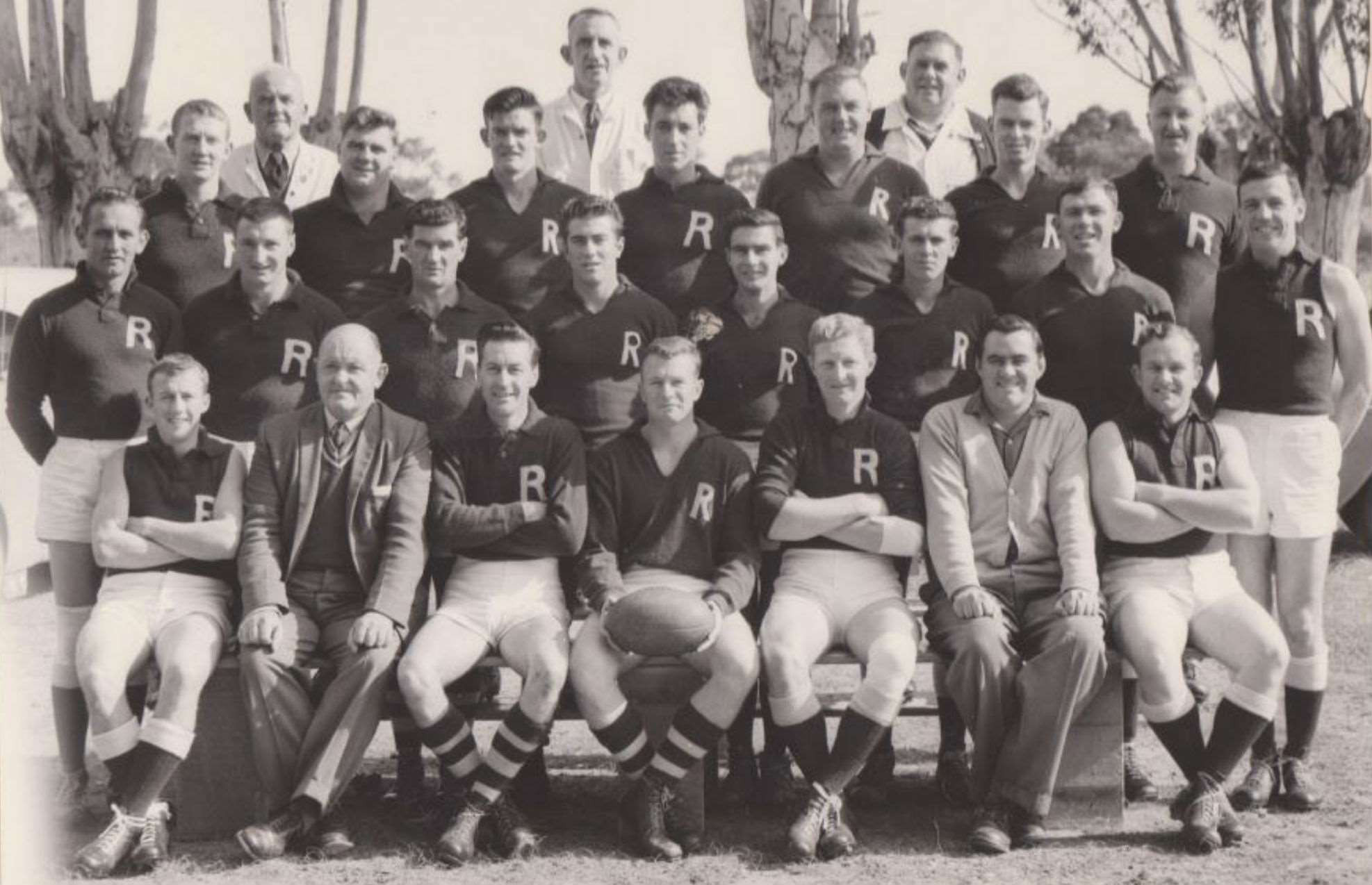
The 1926 season was abandoned when Roseworthy College and Salisbury left to play in other competitions. With the dominance of Gawler South since WWI, Willaston and Gawler Central could not muster very much enthusiasm to continue the association. An attempt was made to enter two Gawler clubs into the Barossa & Light Football Association but the application was rejected. A six team B grade competition was played however with a stipulation that no A grade player would be eligible to participate. Football resumed in 1927 with the inclusion of a new club, Rovers. Rovers were formed from the younger members of Gawler South and this move was designed to provide for a more even competition in the best interests of the game.
Rovers were expelled from the competition in 1939 because association administrators wished to experiment with a district system and allocate designated areas of Gawler to the three local clubs. In 1941, Gawler Central could not find the numbers to form a team but Rovers were allowed to return from Lower North. The Gawler Football Association did well to remain open until that time but eventually went into recess in 1942 for the duration of WWII.
Gawler South became South Gawler in 1957 to signify that the club now represented an area of Gawler. The formation of the Central Districts Football Association introduced to foster support for the new Central Districts Football Club resulted in the departure from Gawler & Districts of the Salisbury, Elizabeth, Two Wells Virginia, Elizabeth North and Salisbury North clubs. The resultant upheaval caused friction and disagreement amongst the remaining clubs, which saw South Gawler and Roseworthy College temporarily transfer to Adelaide Plains.
In 1987, the Barossa and Light Football Association amalgamated with the Gawler and District Football League to form the Barossa Light and Gawler Football Association. South Gawler, Gawler Central and Willaston were foundation members of the new association while Two Wells and Virginia joined Adelaide Plains and Barossa District affiliated with the Hills Football League (Division II) competition.
Club Timeline
Clubs (21)
Mileage
| Town A | Town B | Town C | |
|---|---|---|---|
| Town A | * | 25 | 40 |
| Town B | 25 | * | 18 |
| Town C | 40 | 18 | * |
Records
| Player | Club | Value | Year / Period |
|---|---|---|---|
| J. Smith | Example FC | 312 | 1985-2005 |
| R. Jones | Another FC | 298 | 1990-2010 |
Grand Finals
Medallists
| Year | Player | Club |
|---|---|---|
| 1960 | B. Thompson | Example FC |
| 1961 | K. Williams | Another FC |
Leading Goalkickers
| Year | Player | Club | Goals |
|---|---|---|---|
| 1990 | D. Hill | Example FC | 87 |
| 1991 | M. Johnson | Another FC | 72 |
Photos